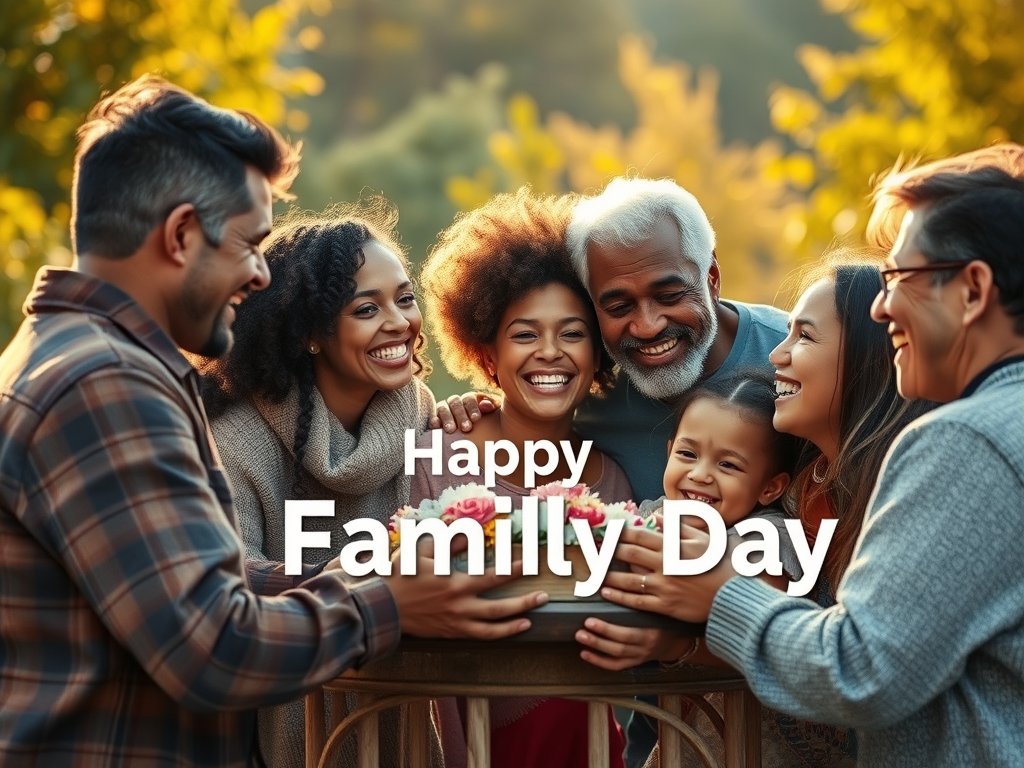
“Family is not an important thing. It’s everything.”” — Michael J. Fox.
FEBRUARY 16, 2026, another year here to celebrate family day. Thank you, Heavenly Father.
A day initiated by Don Getty after reflecting on his own family situation. In 1989, the throne speech announced a new February holiday named Family Day. It is known in other provinces as Louis Real Day, Heritage Day, and Islander Day. The day allows families to spend more time together.
However, the day is appreciated by most.
When we think of the word family we think of our birth parents. But family is who chooses us by adoption, or we choose them.
ANCIENT HISTORY
From the Latin verb—adoptãre, meaning to choose for oneself, take by choice or select. Specifically, to take a family.
Long before laws and agencies existed, ancient civilizations practiced adoption for social, political and familial reasons. Adopting slaves as sons has long been a Middle Eastern practice. As a result, they had inheritance rights. However, these rights were not above those of children descended naturally from the father. Ancient Rome elite frequently adopted heirs to maintain the family name, wealth and power.
We have the account of Rachel and Leah both considered the children born to Jacob by their handmaids as their own sons. These children inherited along with those born directly of Jacob’s legal wives. They were natural sons of the father. The slave girls’ children were considered the wives’ property. Rachel and Leah had property rights in these children. (Genesis 30: 1-24)
And Pharaoh’s daughter’s adoption of Moses. Men and women had equal rights under Egyptian law. Therefore, Pharaoh’s daughter exercised the right of adoption. (Exodus 2:1-10)
CURRENT HISTORY
International adoption (referred to as intercountry or transnational adoption) involves adopting a child from another country. An individual or couple from one country becomes the legal and permanent parent(s) of that child. The laws of countries vary in their willingness to allow international adoptions. Some countries have established rules and procedures for international adoption, while other countries expressly forbid it.
MAJOR ORIGIN and RECEIVING COUNTRIES of CHILDREN
According to a 2013 study, six countries (China, Ethiopia, India, South Korea, Ukraine and Vietnam) were the major origin countries for almost a decade in the period 2003-2011. With slight changes in other countries sending most children.
China has long been a major sending country in international adoption, but as of 2025 the number of international adoptions has drastically reduced to an improved Chinese economy and more restrictive laws prohibiting international adoption by non-relatives. Concerns raised over abuse.
2024 analysis found that the top 10 receiving countries from 2004 to 2021 (of countries where national data was available, ranked by the number of adoptees) were:[19]
Rank Country Total adoptions 2004-2021.
| 1 USA 187,578 | 6 Sweden 10,113 |
| 2 Italy 47,287 | 7 Netherlands 9,253 |
| 3 Spain 37,688 | 8 Germany 7,228 |
| 4 France 35,353 | 9 Norway 4,706 |
| 5 Canada 21,648 | 10 Denmark 4,623 |
The 2009 study found a significant concentration in adoption rates. The top five countries accounted for more than 80% of overall adoption from 1998 to 2007. The US alone accounted for around 50% of overall adoption.
ADOPTION: IMPACT ON PARENTS AND CHILD
Adoption profoundly transforms the lives of both adoptive parents and the child. The process is often lengthy and emotionally demanding, designed to ensure a nurturing environment for the child. For many children, adoption can mean losing connections to their biological families. They may lose ties to their culture and roots as well. This may lead to feelings of uncertainty and overwhelm. Yet, adoption also brings significant benefits. It offers the child stability and opportunities. It provides a supportive family foundation essential for healthy growth.
For adoptive parents, welcoming a child can bring a deep sense of purpose and fulfillment. However, the journey doesn’t end with adoption. The post-adoption period can be mentally and emotionally challenging for both parents and child. Unresolved trauma in the child may surface, and parents may face unexpected issues throughout the lifelong adoption journey.
A CELEBRATED NOTE
As we gather to celebrate Family Day, let’s cherish the bonds—whether with our birth families or adoptive ones. Let’s remember those who may feel unwelcome in their family units. We should also acknowledge those experiencing hardship. Let us hope for justice and compassion for all. Family Day is a time to honour the strength, diversity, and love that families bring into our lives.
My friends, thanks for taking the time to read this post. I wish you a fun-filled day of gathering, lots to eat and encouraging conversation. Enjoy!
 Better The End